You’re about to learn five easy and proven stress relief techniques that can help you decompress in minutes. You can begin to boost your mental, physical, and spiritual health today.
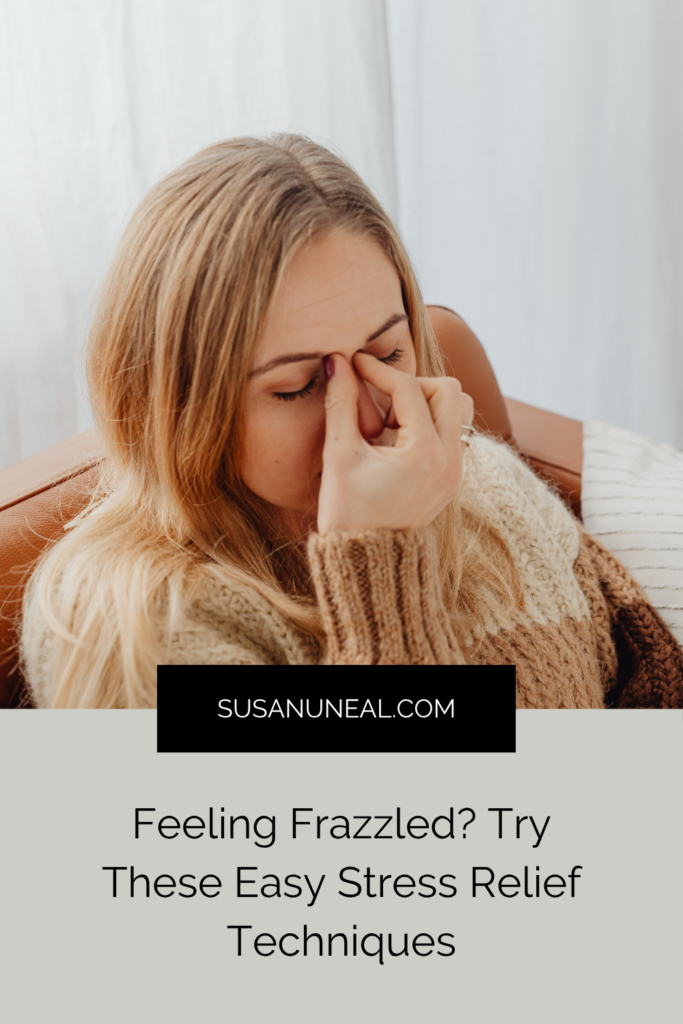
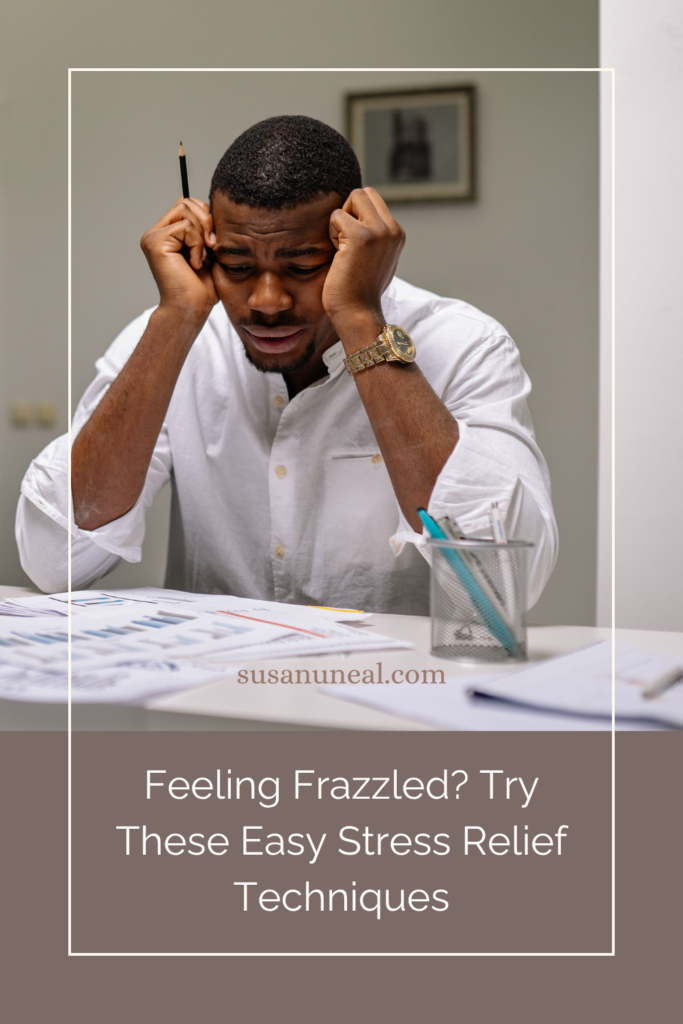
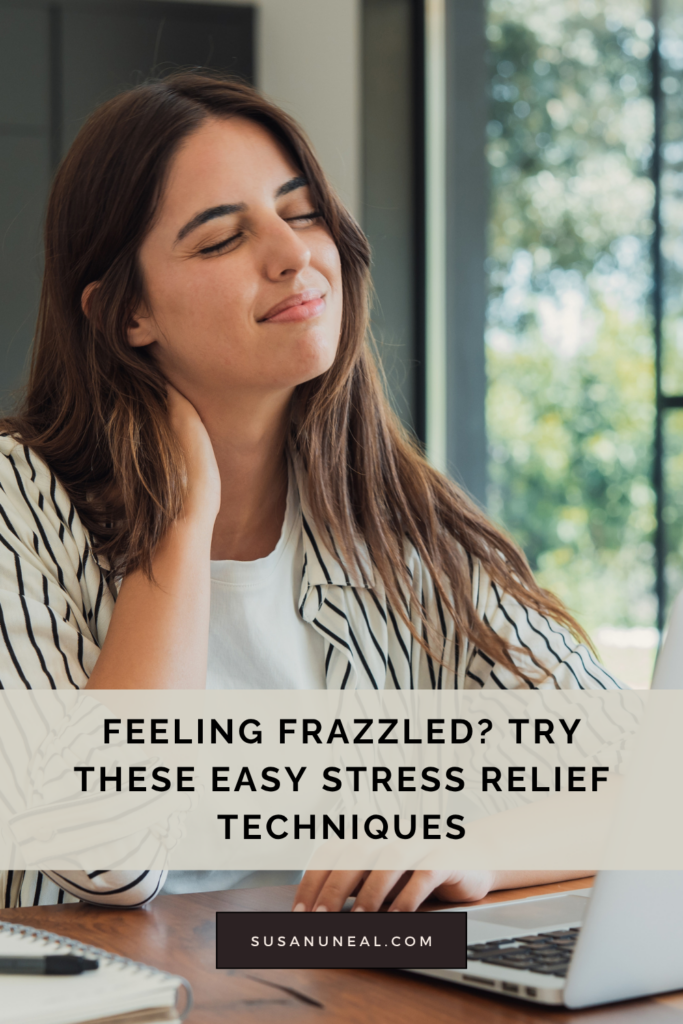
If you’re stressed out, you’re in good company. Almost half of adults feel strained on a daily basis. But stress doesn’t have to control you. With over fifteen years of personal experience, professional training, extensive research, and counseling others, I’ve discovered five of the most effective ways to calm the central nervous system and relax tension. I’m going to guide you in learning these simple practices.

Calm the Central Nervous System
Unmanaged chronic stress can manifest in physical and psychological symptoms including aches and pains, trouble sleeping, headaches, muscle tension, stomach problems, anxiety, and depression. I know from personal experience. Sixteen years ago, I was cowered on the bathroom floor having daily panic attacks. The crushing pressures of caring for my daughter with complex medical and developmental disorders had frazzled my nerves.
Determined to rise up and reclaim my life, I began therapy and my journey of developing stress management skills that helped me to discontinue my anxiety medication and begin to thrive. I then returned to graduate school to become a therapist and researcher to empower others to take control of their stress and anxiety through faith-based stress relief techniques.
The body’s response to stress is complex—one that involves the interconnection of the brain, body, and spirit. When we experience chronic stress, the sympathetic nervous system (SNS), or the “fight or flight response,” stays activated. This continued reaction causes harm to our brain functioning, metabolic processes, and physical health. Our neural networks begin to detrimentally rewire, our stress hormones like cortisol remain elevated, and we become at risk for developing medical conditions such as hypertension, immune system disorders, metabolic disorders like diabetes, and digestive diseases.
To calm the overactive SNS, the goal is to trigger the parasympathetic nervous system (PNS), or the “rest and relaxation” response. Diaphragmatic or belly breathing and mindfulness can be powerful aids in activating the PNS and soothing the mind and body.
Embrace the Powerful Practice of Mindfulness
When we fret about our problems and to-do lists or worry about the future, our stress levels and anxiety escalate. Practicing mindfulness keeps our minds in the current moment which calms the emotionally-reactive areas of the brain (such as the amygdala) and uses the rational part of the brain, the prefrontal cortex.
Mindfulness is intentionally paying full attention to what’s happening in the present moment without judging things as good or bad. Even micro-moments of mindfulness-based stress reduction (MBSR) and mini-relaxation practices can help reverse the damaging effects of chronic stress. Regular practice of mindfulness can even strengthen the prefrontal cortex.
Practice God-Centered Mindfulness
An effective stress reduction plan involves a holistic process that addresses our thoughts, emotions, and physical beings, as well as our connection with God. For Christians, practicing mindfulness includes remaining aware of God’s presence.
Jesus frequently taught about living in the present day. He instructed, “Give your entire attention to what God is doing right now, and don’t get worked up about what may or may not happen tomorrow. God will help you deal with whatever hard things come up when the time comes” (Matthew 6:34 MSG).
Christ-centered mindfulness has been shown to be more effective at reducing stress, depression, and anxiety than secular mindfulness. God knows that when we return our focus to Him and live in the moment, we can experience greater mental, physical, and spiritual health and wholeness.
Start Lowering Your Stress Level
You can use these proven stress relievers anywhere, anytime, for free. With some practice and intentionality, you can begin to relax and feel rejuvenated with these five stress relief techniques.
1. Breathe Deep in God’s Presence.
When we’re stressed, we typically breathe shallow and fast and use our chests rather than our diaphragms, which only intensifies the effects of stress and anxiety. Diaphragmatic or belly breathing is one of the key ways to quickly calm the nervous system. Experts at Johns Hopkins Hospital recommend mini-relaxation practices or taking two to three deep breaths several times throughout the day.
Proper deep breathing can be combined with Scripture meditation in breath prayers. In the sixth century, St. John Climacus wrote, “Let the remembrance of Jesus be present with each breath.”
Practice deep breathing with a breath prayer:
- Sit comfortably in your chair.
- Position one hand on your chest and the other hand just above your belly button.
- Slowly inhale through your nose for three seconds, filling your abdomen. Imagine your belly is inflating like a balloon.
- Gently exhale through pursed lips for four seconds. Imagine slowly blowing bubbles as the balloon deflates.
- Repeat two more times.
As you continue taking deep breaths, silently pray this breath prayer based on Philippians 4:6-7:
Inhale: I receive your peace,
Exhale: As I give my worries to you.
2. Take a Mindful Moment.
When we’re intentional about returning to the present moment and focusing on one task at a time, we can more fully experience and enjoy life with our senses. One of my favorite times to slow down and practice mindfulness is when I’m making coffee in the morning. I slowly measure out the grounds or grind the beans then stay at the machine while the coffee brews, taking in the aroma. Then I listen to the sound of filling my cup to the brim, watching the creamer swirl with the dark coffee. I hold the mug in my hands, the warmth soothing me as I savor each sip. Remaining in the present moment with our senses can be as simple as making coffee.
Observe with your senses:
- Sit quietly and take two slow, deep breaths.
- Become aware of God’s presence inside and all around you.
- Close your eyes and observe with your senses.
- What do you feel? Notice the firmness or softness of your chair, your feet on the floor, and the textures of your clothes.
- What do you hear? Listen for as many sounds as you can.
- What do you smell? Take in the scents and aromas.
- What do you taste? Note any flavors lingering in your mouth.
- What do you see? Open your eyes and look around. Observe your surroundings.
- Take two more slow, deep breaths.
- Mindfully return to your day.
3. Pair Faith with Physical Activity.
Whether it’s stretching, strength training, or another physical activity, even just brief sessions of simple exercises can significantly reduce stress levels and improve overall wellbeing. Walking is a very effective way to boost our mood, sharpen focus, improve sleep (which lowers stress), and improve our ability to handle daily problems. In a Woman’s World article, a Harvard professor explains that even just 30-second bursts of walking, or “micro-walks,” can have significant health benefits. You can also pair your walks with mindfulness and prayer.
Mindfully move:
- Take out your earbuds to pause the podcast or music or to return your phone calls later.
- Engage in a physical activity while practicing Christian mindfulness. You could:
- Say a breath prayer while stretching.
- Practice Christian yoga.
- Recite Scripture while strength training.
- Sing worship songs while enjoying your favorite type of exercise.
4. Relax Muscle Tension.
When we’re stressed, we can experience a disconnect in our thoughts, emotions, bodily sensations, and spirit. Remaining unaware of our worried thoughts or tense muscles can increase anxiety, perpetuate the negative cycle, and even create distance from God.
Progressive muscle relaxation (PMR) exercises can increase our awareness of God’s Spirit within our thoughts and emotions and help us reconnect with our bodies. Extensive research has shown that PMR exercises can reduce stress, anxiety, and depression.
Relax your mind, body, and spirit:
- Sit comfortably in your chair or lie flat on your bed or the floor.
- Take two slow, deep breaths.
- Begin with your feet. Curl your toes like you’re picking up marbles off the floor. Squeeze for five seconds, then relax.
- Move up through your body, tensing and relaxing each muscle group (without pain or discomfort).
- Slowly inhale through your nose as you tense your muscles. As you exhale through your mouth, release your tension and stress to God. You can say a simple prayer such as “Jesus, I lay down my problems” as you relax your arm muscles.
- Notice any body sensations, thoughts, or emotions that arise. Be curious about what your mind, body, and God’s Spirit might be trying to tell you.
- Finish with the top of your head. You can end by saying a short prayer like “Thank you, God, for my mind, body, and spirit. I release to you the thoughts and emotions that cause me to stress.”
5. Put Down Your Phone.
Another way we can control our stress response is to reduce the amount of time we spend on our devices, especially first thing in the morning. Reduction in smart phone use can equal improvements in stress levels and overall health. In place of scrolling, try simply being in the present moment and focusing on your day.
Manage your relationship with your phone:
- Turn off any unnecessary notifications.
- Set reminders to put down your phone and practice God-centered mindfulness.
- Monitor your time on social media.
- Schedule certain times to check your email instead of continuously checking throughout the day.
- When in the presence of others, put away your phone and be fully present with them.
Start Small and Begin Today
I encourage you to pick one of these techniques and try it today. Pause to practice God-centered mindfulness and take deep breaths. Start with just one minute. Then work up to three, then five. As you more fully live in the present moment, you can begin to experience real relief from stress and tension and know the calming peace of God.
Which stress relief technique will you try today?
[Disclaimer: This article is not providing or intended to replace medical or mental health advice. Please consult a medical or mental health professional if you have any concerns about your physical or behavioral health.]
About the Author
Kristin Faith Evans, MA, MS, LMSW,is an award-winning author, national speaker, licensed master social worker, and a special needs mom. She empowers others with the skills to thrive in their faith, mental health, and marriages. She just released her newest book, The Frazzled Parents’ Guide to Less Stress. Kristin has appeared on over forty different radio and podcast shows including Focus on the Family, Family Life Radio, and Moody Radio and has been featured in numerous publications including Exceptional Needs Today, Christian Counseling Connection, and Rare Parenting. She enjoys a cup (or two) of Italian roast, dark chocolate, traveling, and authentic conversations with friends. Find out more at KristinFaithEvans.com where you can download your free guides to reduce stress. Find other free resources at DisabilityParenting.com.
